SumUp vs Square vs Zettle: Which Is Cheapest in the UK
Compare Sumup, Square & Zettle to find the best choice for your business to save money and start taking payments today
3/22/202615 min read
SumUp vs Square vs Zettle: Which Is Cheapest in the UK?
Introduction
Most UK businesses do not start by comparing card machine fees in detail. They choose a provider, get the reader delivered, start taking payments, and move on. That makes sense in the early stages. Speed matters, setup matters, and anything that gets money coming in quickly feels like the right decision. The problem usually comes later.
A few months in, the business is taking more payments, more customers are paying by card, and the statements start to tell a different story. Those small transaction fees that barely registered at the start are now appearing on every sale. Once you look closely, the total cost becomes much harder to ignore.
That is exactly why so many UK businesses end up comparing SumUp, Square and Zettle. They are three of the best known names in the card payment market, they all promise simple pricing, and they all position themselves as low cost, contract free alternatives to traditional merchant accounts. On the surface, they look very similar. Each offers a card reader, each lets you accept contactless and chip and PIN payments, and each is designed for smaller businesses that want a straightforward setup, but similar does not mean equal.
A provider that looks cheap at first can become expensive once your monthly card turnover increases. A provider with slightly higher fees may still offer better value if it includes stronger software, better reporting, or a smoother system for retail and hospitality. A card machine that works perfectly for a sole trader may not be right for a shop with staff, stock control and busy weekend trade, that is why this comparison matters.
In this guide, we break down SumUp vs Square vs Zettle properly for UK businesses. We cover pricing, transaction fees, card reader costs, payment types, ease of use, features, payout speed, and long term value. We also include a fee calculator section, a realistic look at the pros and cons of each provider, and a section on how Cheap Card Machines can help if you want a cheaper option than the obvious household names.
If your main question is simply which one is cheapest, the short answer is that SumUp usually comes out lowest on in person transaction fees. But that is only part of the story. The better question is which provider is cheapest for the way your business actually takes payments. That is what this guide is here to answer.
Why UK Businesses Compare SumUp, Square and Zettle
There is a reason these three brands dominate so many searches around cheap card machines in the UK.
They all appeal to the same type of buyer. A business owner wants to start accepting card payments without dealing with a long application process, a complicated pricing schedule or a fixed term contract. They want a simple card reader, a recognisable brand, and costs they can understand.
That is where SumUp, Square and Zettle have done well. They have made card payments feel accessible. For sole traders, start-ups, market traders, salons, cafés, independent retailers and mobile businesses, that accessibility is a big selling point, the challenge is that simple pricing can be misleading.
Flat rate pricing is easy to understand, but easy does not always mean cheapest. If one provider charges 1.69% and another charges 1.75%, the difference looks tiny. Many business owners would barely notice it. Yet once you multiply that across thousands of pounds every month, it starts to affect profit. The larger the business becomes, the more noticeable that gap gets.
This is why comparison content around SumUp vs Square vs Zettle performs well in search. People are not just looking for a card machine. They are trying to avoid overpaying.
That is also why this page matters for Cheap Card Machines. A lot of businesses search these brands because they think they are comparing the whole market, when in reality they are only comparing the most visible names. Sometimes one of those three is the right answer. Sometimes it is not.
What Are SumUp, Square and Zettle?
SumUp, Square and Zettle are all payment service providers that let businesses accept card payments without setting up a traditional merchant account in the usual way.
For years, taking card payments often meant dealing with a bank or acquirer, signing a contract, paying monthly rental fees, and navigating pricing structures that were not always transparent. That model still exists, and for some businesses it can be the cheaper route, but it is not the route these three brands are built around.
Instead, they offer a simpler package. You buy a card reader, create an account, link a bank account, and start taking payments. Fees are usually charged as a flat % of each transaction. For many smaller businesses, that feels easier and safer than committing to a long agreement.
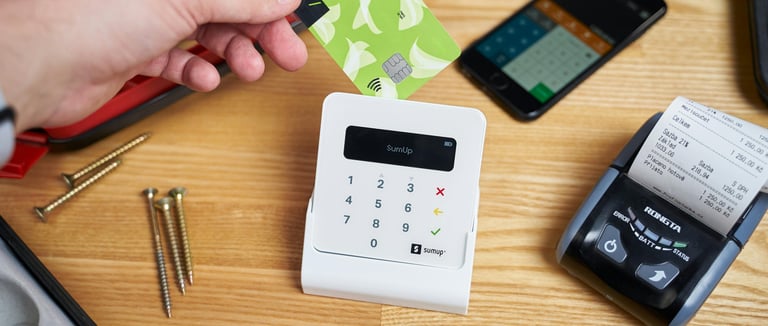
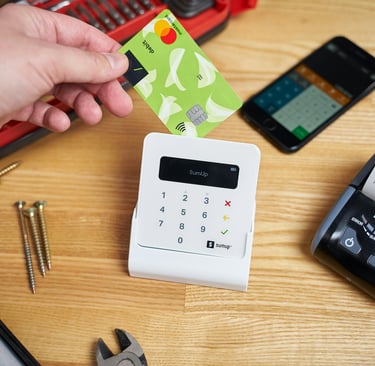
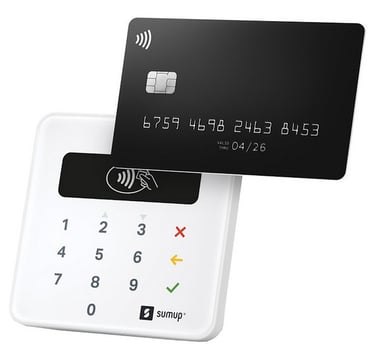
SumUp is generally positioned as the low cost, no fuss option. It appeals strongly to sole traders and smaller businesses that want a basic setup and low transaction fees.
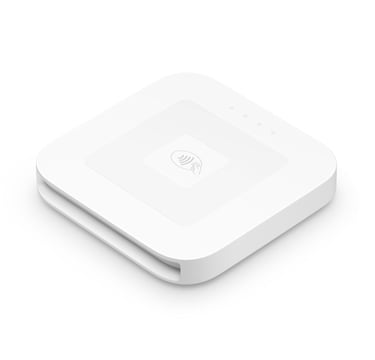
Square is broader. It still serves micro businesses, but it also pushes much harder on software, point of sale tools, stock management, analytics and integrations. It is not just selling a reader. It is selling more of a business operating system.
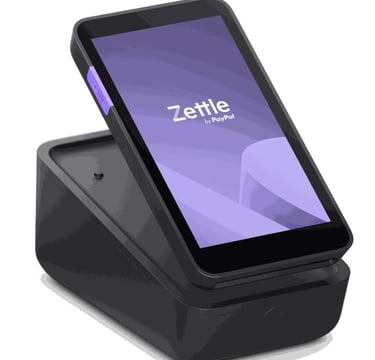
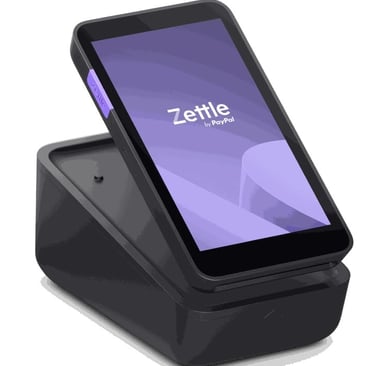
Zettle, previously known to many businesses as iZettle, sits in a similar space to Square but is often associated with ease of use and PayPal integration. For some businesses, especially those already comfortable with PayPal, that familiarity is attractive.
All three providers support the payment methods customers expect in the UK, including debit cards, credit cards, contactless payments, Apple Pay and Google Pay. The difference is not whether they can process payments. The difference is how much they cost and how well the system fits your business.
SumUp vs Square vs Zettle: Quick Answer
If you want the short version before going deeper, here it is.
For straightforward in person payments, SumUp is usually the cheapest of the three. Its standard transaction fee is lower than Square and Zettle, and that lower rate consistently saves money over time.
Square and Zettle both sit at the same standard in person fee level in many UK comparisons, which means they are usually more expensive than SumUp on pure transaction cost. Between those two, Square often offers better overall value because its software, reporting and point of sale features are stronger.
Zettle can still make sense for businesses that value its simplicity or want a payment setup closely tied to PayPal, but it is rarely the outright cheapest option.
That said, “cheapest” depends on more than one number. Online payments, remote payments, the type of card machine you choose, and how much functionality you need can all affect which option is best value.
So while the headline answer is that SumUp usually wins on cost, you should not stop there.
Pricing Overview: What You Are Actually Paying For
When businesses compare cheap card machines in the UK, they often focus on the cost of the card reader first. That is understandable, but it is usually the wrong place to put most of your attention.
The reader price is a one off cost.
The transaction fee is an ongoing cost.
That ongoing fee is what shapes the real cost of your provider over six months, twelve months and beyond.
With SumUp, you are usually looking at a lower standard in person transaction fee than Square and Zettle. It also tends to promote simple, flat rate pricing that appeals to smaller businesses.
Square’s pricing is usually a touch higher for in person transactions, but its ecosystem is stronger. If you only need a very basic card machine, that extra cost may not feel justified. If you need more advanced features, it can be.
Zettle is usually positioned with similarly simple pricing and a recognisable brand, but the pricing edge is not normally in its favour compared with SumUp.
It is also important to separate in person payments from online payments. Businesses often search for the cheapest card machine in the UK when what they really need is the cheapest overall payment setup. Those are not always the same thing. A provider that looks cheapest for face to face card transactions may be less attractive if you also send payment links, take online orders, or process invoices remotely.
This is where a proper comparison becomes more useful than a quick glance at the headline rate.
Card Reader Pricing
Card reader pricing matters most when cash flow is tight and a business is just getting started.
Square often attracts attention because of its low entry level hardware pricing. The cost of getting a basic reader into your business can look very appealing if you want the cheapest possible start.
SumUp’s readers are also relatively affordable, though the range depends on the model. It offers more than one device, so the price can vary depending on whether you want the most basic reader or a more advanced terminal.
Zettle usually sits in a similar range, though not always the cheapest on upfront hardware alone.
For many businesses, this upfront cost is not what determines the best long term choice. Saving a few pounds on hardware can be wiped out quickly if your transaction fee is higher month after month. That is why card reader cost should be viewed as the entry cost, not the true cost.
If you are only taking very low volumes, hardware price may carry more weight. If you are processing thousands of pounds every month, the transaction fee matters far more.
In Person Transaction Fees
This is the section most businesses care about, and rightly so.
For standard in person transactions in the UK, SumUp is generally lower than Square and Zettle. That difference is small on paper, but it is the main reason SumUp is so often seen as the cheapest option for small businesses taking payments face to face.
Let’s say one provider charges 1.69% and another charges 1.75%. On a £10 sale, that difference is almost meaningless. On a £100 sale, it is still small. But over hundreds or thousands of transactions, the total starts to grow.
At £5,000 per month in card sales, the difference is visible.
At £10,000 per month, it becomes clearer.
At £20,000 per month and above, you are no longer talking about pennies.
This is where businesses often realise they should have compared providers sooner.
Square and Zettle are usually level with each other on the standard face to face transaction fee, which means neither of them has a clear cost advantage over the other in that area. So if you are comparing those two, the decision usually comes down to software, usability, and which system fits your workflow better.
If you are comparing either of them against SumUp on pure in person cost, SumUp usually comes out ahead.
Online Payments and Remote Payments
A common mistake in this market is assuming that the cheapest card machine is automatically the cheapest way to take payments overall.
That is not true if your business also takes remote payments.
Many UK businesses now operate in a mixed way. A shop may take in person payments in store, but also send payment links. A salon may take deposits online and final payments in person. A tradesperson may take some payments on site and others by invoice. An independent retailer may sell in store and through a website.
In those cases, you need to look at online payment pricing as well as in person transaction fees.
Square is often more competitive than people expect on online payments. Depending on the type of transaction, it can work out better than SumUp or Zettle if a meaningful share of your revenue comes through ecommerce or remote card payments.
SumUp and Zettle can still be good options, but if online sales matter, you need to compare the full mix rather than only the card machine fee.
This is one of the reasons some businesses choose Square despite its slightly higher in person rate. They are not only buying a card machine. They are buying a system that may work better across different channels.
Fee Calculator: Real UK Cost Examples
The easiest way to compare SumUp vs Square vs Zettle is to convert the % fee into actual monthly cost.
Here are simple examples based on in person card payments only.
If your business takes £2,000 per month in card payments, the difference between SumUp and a provider charging a slightly higher rate is small. You might save a modest amount across the year, but it is not likely to transform the business. At that level, ease of use and setup may matter just as much as price.
If your business takes £5,000 per month in card payments, the saving becomes more visible. SumUp’s lower fee starts to create a noticeable gap over the course of a year, even if it still looks minor month to month.
If your business takes £10,000 per month in card payments, the fee difference matters much more. This is the point where many businesses begin to review whether a flat rate provider is still the best choice.
If your business takes £20,000 per month or more, a small difference in transaction rate can create a meaningful yearly cost gap. At this level, you should not only compare SumUp, Square and Zettle. You should also ask whether a traditional merchant account or bespoke pricing could reduce your costs further.
Now put that into practical terms.
At £5,000 per month, even a 0.06% fee difference adds up over twelve months.
At £10,000 per month, it doubles.
At £20,000 per month, it doubles again.
That is why businesses often move from “which card machine is easiest?” to “which card machine is actually cheapest for my turnover?”
The answer can change as the business grows.
SumUp: Pros and Cons
SumUp has become popular in the UK for one main reason. It is usually the cheapest simple option for face to face card payments.
That makes it attractive to sole traders, market traders, salons, independent shops, cafés, mobile businesses and start-ups that want a straightforward setup without a monthly contract.
Its strengths are clear. The pricing is easy to understand. The brand is recognisable. The reader is simple to use. The standard in person transaction fee is lower than Square and Zettle in many like for like comparisons. For businesses that just want to take card payments cheaply without overcomplicating things, that is a strong proposition.
It also suits businesses that do not need advanced software. If you only need a card machine, basic reporting and a simple dashboard, SumUp often feels like enough.
The downside is that “enough” is not the same as “best” for every business.
If you need deeper reporting, stronger stock control, more advanced point of sale features, or a more developed ecosystem around your payments, SumUp can feel limited. That does not make it bad. It just means it is more focused.
For some businesses, that focus is exactly why it wins.
For others, it can feel too basic once the business becomes more complex.
In short, SumUp is strong on price, strong on simplicity, and weaker on advanced functionality.
Square: Pros and Cons
Square is often the most rounded option in this comparison.
It is not usually the cheapest on basic in person transaction fees, but it makes a strong case for itself through software and flexibility. Many businesses choose Square not because it saves the most on fees, but because it makes the wider business easier to run.
That can matter more than people expect.
If you are running retail or hospitality, stock control and reporting are not side issues. They affect daily operations. If you have multiple products, staff members, busy trading periods, and a need for cleaner sales data, Square has a clear advantage over a simpler provider.
It is also better suited to businesses selling across more than one channel. If you take in person payments and online payments, Square can be a more natural fit than a provider that is mainly focused on the physical card reader.
The downside is obvious. If your only priority is the lowest fee for in person transactions, Square usually loses to SumUp. For a small business with basic needs, paying more for features you do not use is not good value.
So Square is best understood as the feature-led option. If you need those features, it can be worth the extra cost. If you do not, it can feel more expensive than necessary.
Zettle: Pros and Cons
Zettle remains a familiar name in the UK card payment space and still appeals to businesses that want a simple, known brand with straightforward setup.
Its integration with PayPal is a clear part of its appeal. For businesses already comfortable with that ecosystem, or for owners who want payment tools under a familiar umbrella, Zettle can feel like a natural option.
It is also relatively easy to get started with, which matters for smaller businesses that do not want a complicated onboarding process.
The challenge for Zettle is that it often struggles to be the obvious winner in this three-way comparison.
If the priority is low in person fees, SumUp usually looks better.
If the priority is software, reporting and business tools, Square usually looks better.
That leaves Zettle in a position where it can still be a good choice, but less often the best value choice.
This does not mean Zettle is poor. It means it is harder to justify unless its specific strengths matter to your business. If PayPal integration is valuable to you, or if you simply prefer the way Zettle works, it may still be a sensible choice. But on pure cost, it is rarely the standout winner.
Which Provider Is Cheapest for Different Business Types?
The best provider depends heavily on how the business operates.
For a sole trader, market stall, mobile hairdresser, plumber, electrician or pop-up seller, SumUp often makes the most sense. These businesses usually care about keeping costs low, getting started quickly, and avoiding complexity. In those cases, lower in person fees matter more than advanced reporting.
For a retail shop, café, takeaway counter, or hospitality business, Square often becomes more attractive. These businesses are more likely to need a stronger point of sale setup, better reporting, product management and staff visibility. Even if the transaction fee is slightly higher, the software can justify it.
For a business already embedded in PayPal, Zettle may still appeal. That is especially true if simplicity is valued and the business owner prefers a familiar ecosystem.
For businesses with growing turnover, the real answer may be none of the above. Once monthly card volume reaches a certain level, flat rate providers can stop being the cheapest option altogether. That is the point where a wider market comparison matters.
The Part Most Comparison Pages Miss
Most pages comparing SumUp vs Square vs Zettle stop once they have named the cheapest of the three. That is useful, but incomplete.
A business searching for cheap card machines in the UK is not always asking the right question. They ask whether SumUp, Square or Zettle is cheapest because those are the names they know. The more useful question is whether those three are the cheapest options available for their turnover and business model. Often, they are not.
Flat rate providers are designed for convenience. That is why they are so effective at attracting small businesses. But convenience has a cost. Once transaction volume increases, a bespoke merchant account or alternative pricing structure can undercut them.
That is where many businesses keep overpaying. They assume the household names must still be the best value because they were the easiest options to find. This is exactly where Cheap Card Machines can add value.
How We Can Help
At Cheap Card Machines, we help UK businesses compare card payment options properly.
That means looking beyond the obvious brands and beyond the headline marketing claims. Instead of assuming SumUp, Square or Zettle is automatically the best choice, we look at how your business actually takes payments.
We consider your monthly turnover, the average transaction value, whether you trade in person, online or both, and how important things like reporting, terminals and software are to your day to day operation.
For some businesses, the answer genuinely is SumUp. If you are small, mobile, and primarily focused on keeping in person costs down, it can be the right fit.
For others, Square may be the better choice because the software is stronger and the wider setup is more useful.
For others again, the real saving may come from moving away from flat rate providers entirely and onto a more competitive merchant account solution.
That is the part many businesses miss until they have already spent too much.
Our role is to help you compare those options properly, avoid hidden costs, and find the cheapest practical solution for your business rather than the most heavily advertised one.
Conclusion
Choosing the right card machine comes down to how your business actually takes payments.
If you are mainly taking payments in person and want to keep costs as low as possible, a simpler provider with lower transaction fees will usually be the best fit. For many small businesses, that is where the biggest savings are made.
If you need more than just a card reader, such as reporting, stock control or a full point of sale system, paying slightly higher fees can make sense if it improves how your business runs day to day.
There is no single option that is best for everyone. A setup that works well for a sole trader or mobile business may not be right for a retail shop or hospitality venue with higher volume and more complex needs.
The most important thing is to look beyond the headline rates and consider the full picture. That includes how often you take card payments, your monthly turnover, and whether you need additional features or just the lowest possible cost.
If you are unsure, it is worth reviewing your current setup. Many UK businesses stick with the first provider they choose and end up paying more than they need to over time.
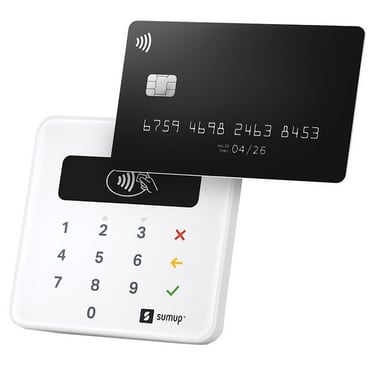
Frequently asked questions
What is the difference between SumUp, Square and Zettle?
The main difference is that SumUp focuses on low cost and simplicity, Square offers more advanced features like reporting and point of sale tools, and Zettle sits in the middle with a straightforward setup and PayPal integration.
Are there any monthly fees with these card machines?
No, SumUp, Square and Zettle all offer standard plans with no monthly fees, although SumUp does offer an optional subscription that reduces transaction fees for higher volume businesses.
Can I get cheaper rates than SumUp, Square or Zettle?
Yes, if your business takes higher monthly card payments, you can often access lower transaction rates through merchant account providers, which can work out cheaper than flat rate pricing over time.
Contact
Newsletter
info@paymentsworld.co.uk
0344847 5454
© 2026. Payments World All rights reserved.